The cumulative time limit of 6,000 trains in China and Europe is the most concerned pain point.
The China-Europe train, which is at the forefront of the "Belt and Road" construction practice, once again sent shocking figures!
By the beginning of November 2017, the total number of trains in China and Europe has exceeded 6,000, and the number of trains in this year alone has exceeded 3,000. It is expected that the number of trains in China and Europe may reach 3,500 in the whole year, and the goal set in the China-Europe Train Construction and Development Plan (2016-2020) will be achieved ahead of schedule.
On November 22nd, the 2nd China-Europe International Cooperation Forum was held in Beijing. Professionals from the government, foreign embassies in China, a number of train platform companies and European railway enterprises gathered together to discuss hot issues such as the opening of new China-Europe train lines, overseas warehousing and distribution construction, return cargo collection, and railway postal transportation. Under the common desire of strengthening communication and cooperation and cohesive development, all parties face the problems directly and actively seek innovative methods, so that the China-Europe train will not be affected by its own success and eventually become a logistics scheme chosen by more enterprises.
"Who is engaged in the operation of China-Europe trains, who has not been complained by customers this year?" In the open forum, the reporter was shocked to hear such words! China-Europe trains, which serve the trade of goods between China and Europe, have entered the international logistics market with obvious time advantages over traditional shipping. Is the situation wrong now?
Since China issued the "China-Europe Train Construction and Development Plan (2016~2020)" in October last year, the development momentum of China-Europe trains has become more rapid, the radiation range has expanded rapidly, the goods category has been gradually expanded, and the quality of running trains has also been greatly improved. Just a few days ago, information from China Railway Corporation showed that at the beginning of November 2017, the total number of trains in China and Europe had exceeded 6,000, and the number of trains opened this year alone exceeded 3,000! According to the trend that the enthusiasm for running trains in various places continues to rise, the feeling of most people is that the number of trains will reach 5,000 by 2020, which can only be regarded as a conservative estimate.
Shouldn’t the China-Europe train, which has been flying at full speed, be driving faster and faster with super high attention and strong support from many parties? Where does the problem of prescription come from?
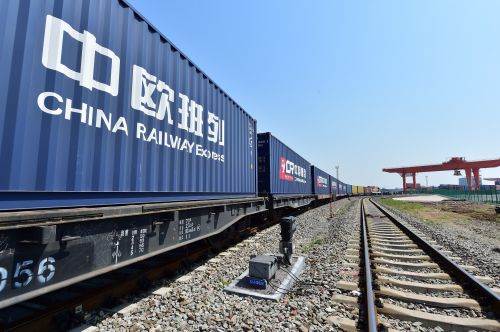
Congestion comes unexpectedly
In recent months, news of station congestion and delayed trains has been reported from time to time at several key European railway nodes that China-Europe trains pass through, such as Duisburg, Germany, Mara, Poland and Brest, Belarus. The promised transportation time cannot be observed, and the customer experience becomes worse, which not only seriously affects the efficiency of the supply chain, but also inevitably damages the brand reputation of CEIBS.
"The biggest pain point of the whole Central European train now is timeliness!"Liu Jun, the executive director of Shanghai Tiejia International Freight Forwarding Co., Ltd., hit the nail on the head. In 2011, the running time of Chongqing New Europe was 15 days, and now the average running time is 18 to 20 days. Why is it slowing down? Liu Jun’s answer is that it is related to the rapid development of the industry."In less than seven years, from a dozen columns to more than 3,000 columns this year, the volume has increased by 200 times. For such a speed, the preparations of all parties involved in the market are obviously insufficient. "
Liu Jun believes that from the perspective of access, the three ports of Alashankou, Manzhouli and Erenhot are already operating at full capacity. With the increase of the number of trains in the future, the capacity of Alashankou is likely to become a bottleneck. From the perspective of the capacity building of all parties involved, the number of trains in China and Europe has exploded, but the number of personnel in the main companies operating the trains has not increased so fast, and the enterprises focusing on railway freight forwarding, container operation and overseas freight forwarding in the service chain have not kept pace with the trains.
"The development of China-Europe trains exceeded expectations, which also led to the infrastructure failing to keep up with the development speed of trains, and the infrastructure capacity should be expanded."Wang Lijun, chairman of Wuhan Hanou International Logistics Co., Ltd., expressed similar views.
Obviously, accelerating the development of new lines is becoming a good choice. For example, RolandasBrazinskas, the chief representative of Lithuanian Railway Co., Ltd. Beijing Representative Office who attended the forum, brought such suggestions. According to him, two new freight centers in Lithuania not only have adequate loading facilities, but also can provide 45-day free storage service. No matter the border stations near Poland or Belarus are delayed or blocked, this is a brand-new logistics route for China goods to enter the Nordic countries’ markets.
"There is no need for each company to flock to the same site, and endure the decline in service quality caused by congestion. Strengthening the relationship with overseas logistics partners can enhance the differentiation of line services and thus surpass them in the competition of supply customers." There is not only one who wants to be a stop for trains in China and Europe. Thanks to the advice of Hanou Company, Anam, the Netherlands has planned a multi-functional industrial park centered on the station, which is expected to be completed in 2019. Anam has the same location advantage as Duisburg Station, only over 100 kilometers away from Duisburg. "Why don’t we go to Duisburg Station?" Wang Lijun said that after the completion of Anam Station in the Netherlands, China and Europe will open a new train line to the city directly.
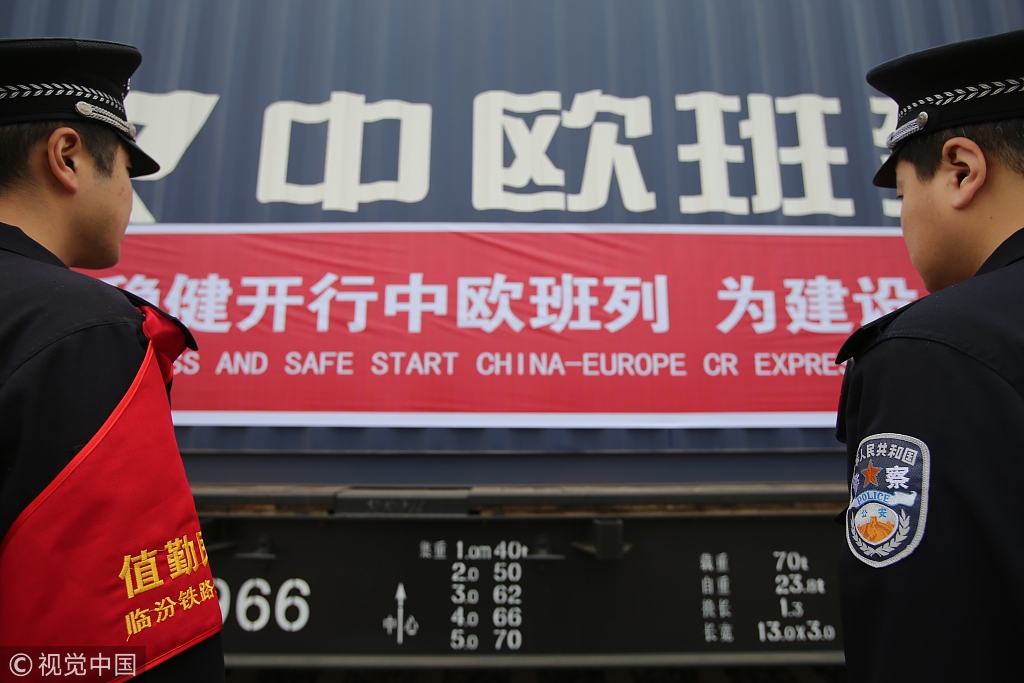
Shanxi Linfen iron police escort the Central European train (photo from: vision china)
Pain points cannot be avoided.
As a leading enterprise in the logistics field in China and the largest international freight forwarding enterprise, Sinotrans has obviously accelerated its pace in the development of train business in the past two years, and the layout of trains has become increasingly rich, and a number of routes have been formed in Northeast China, Central China and South China, with the first train imported from Tashkent to China and the first refrigerated container train in the history of trains in Central Europe. With the advantage that the headquarters can drive the national unity, coordination and interaction, Sinotrans is making every effort to attack.
However, Wu Xueming, vice president of Sinotrans Co., Ltd., who participated in the China-Europe International Cooperation Forum for the first time, said in his speech that,The key to the development of China-Europe trains is to solve the pain points, and the imbalance of import and export sources, low efficiency of customs clearance and reloading, and low visibility of information asymmetry are the three main pain points.He believes that the development direction of China-Europe trains is to strengthen network operation, not only the lines need to strengthen network layout, but also the train transportation needs to be interconnected with other modes of transportation.
Liu Jun’s view coincides with Wu Xueming’s. He believes that information asymmetry and lack of data sharing have restricted the development of China-Europe trains. At present, there are 52 cities running trains, but there are only 10 cities running trains stably. It is urgent to build a dynamic data platform to record all kinds of data of trains in time and accurately, and provide data services for train companies, railway operators and specific customers. The "innovative" China-Europe train products should also be connected with the railway train lines already in operation in China and Europe, that is, to realize the network operation of "combining dry and branch".
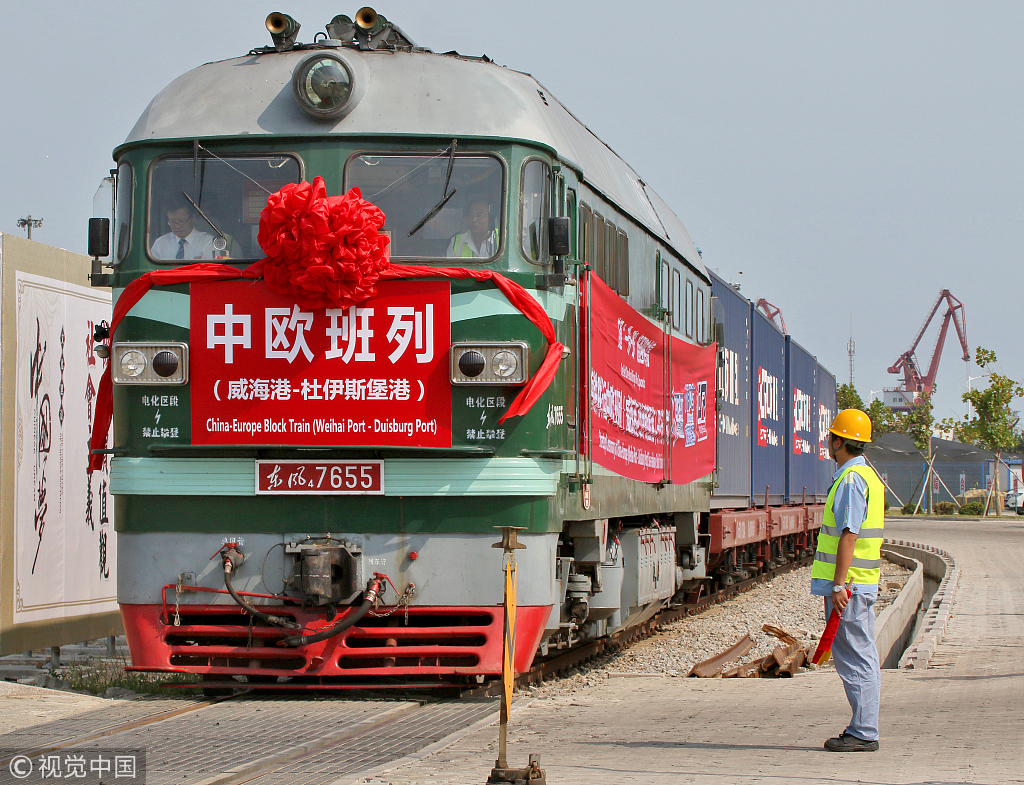
Shandong’s first "point-to-point" China-Europe direct train was opened (Image from: vision china)
At present, the China-Europe train has achieved from 0 to 1, but how can it go from 1 to N? Wang Lijun believes that the China-Europe train has not yet been integrated into the local logistics chain. How to build the last mile and make full use of local logistics resources to build a stable local logistics network is the problem that China-Europe train will face in the next stage. Wang Lijun said that in the first round of "rushing to run", each class competed for government support, infrastructure and talent reserve, and entered the second round of "long-distance running", relying on the improvement of logistics system, port qualification and infrastructure, and industrial agglomeration. "Fifty-two cities have opened trains, but local trains should abandon simple and rude large-scale replication, rationally allocate and fully coordinate existing resources in light of their own reality, and study and open up routes that meet their own urban characteristics." Wang Lijun stressed.
On November 13th, local time in Slovakia, the first Central European train from China arrived at the Danube Port Station in Bratislava, the capital of Slovakia. "China Dalian-Slovakia Bratislava" Central European train is the first Central European train in China to go directly to Slovakia. It runs 10,537 kilometers and lasts for 17 days. A total of 41 containers were loaded with a total value of more than 3 million US dollars. The goods mainly came from electronic products, mechanical parts and light industrial products in East China, North China and Shandong. The goods contained in the train will be transferred to Hungary, Germany, Italy, Spain and other European countries one after another. Reporter Zhang Yumei