The following article comes from Reading the City Studio, written by Li Hang.
Reading the City Studio.
Give me three minutes to show you the city.


Marathon became a part of the city symbol.

如果说,今年夏天人们问得最多的问题是:你抢到演唱会门票了吗?那么到了秋天,这个问题变成了:你报名马拉松了吗?
12月10日,2023广州马拉松赛即将鸣枪起跑。在报名阶段,24小时内报名人数就突破了10万。报名截止时,共有140846名跑者报名了今年的广马,刷新了历届广马报名人数纪录。
今年以来,全国各地马拉松赛事不断涌现。
10月29日,有“国马”之称的北京马拉松开赛,3万名选手从天安门广场出发,奔向42公里之外的奥林匹克公园中心区景观大道。
全国范围内,那一天还有成都、西安等超过20场马拉松赛事举行,至少有30多万人挑战自己的体能极限。
当跑者挤在一二线城市的赛道奔跑,更多的三四线甚至不知名的小县城也开始热衷举办马拉松赛事。
据不完全统计,11月全国共有98场马拉松赛事,其中既有上海、深圳、南昌等一二线城市,也有信阳、济宁、衢州等三四线城市。
密集的马拉松赛事不只彰显了群众参与健身运动的热情,42公里赛道背后,还隐藏着一笔经济账。

马拉松回归之年
公元前490年,菲迪皮茨从马拉松平原出发,将希腊联军击败入侵波斯军队的获胜消息带到42公里之外的雅典城。
After reaching the finish line, Fidi Pitz died of exhaustion.
There are many historical records about his being good at running, but no one knows how long it took him to run for the last time in his life. But later generations began to commemorate the great messenger with a marathon-in the form of constantly refreshing records.
This project was established in the first modern Olympic Games in 1896.
In 1987, the first urban marathon was held in Boston, a famous historical and cultural city in the United States. Today, "Poma" has become a dream place for runners all over the world.
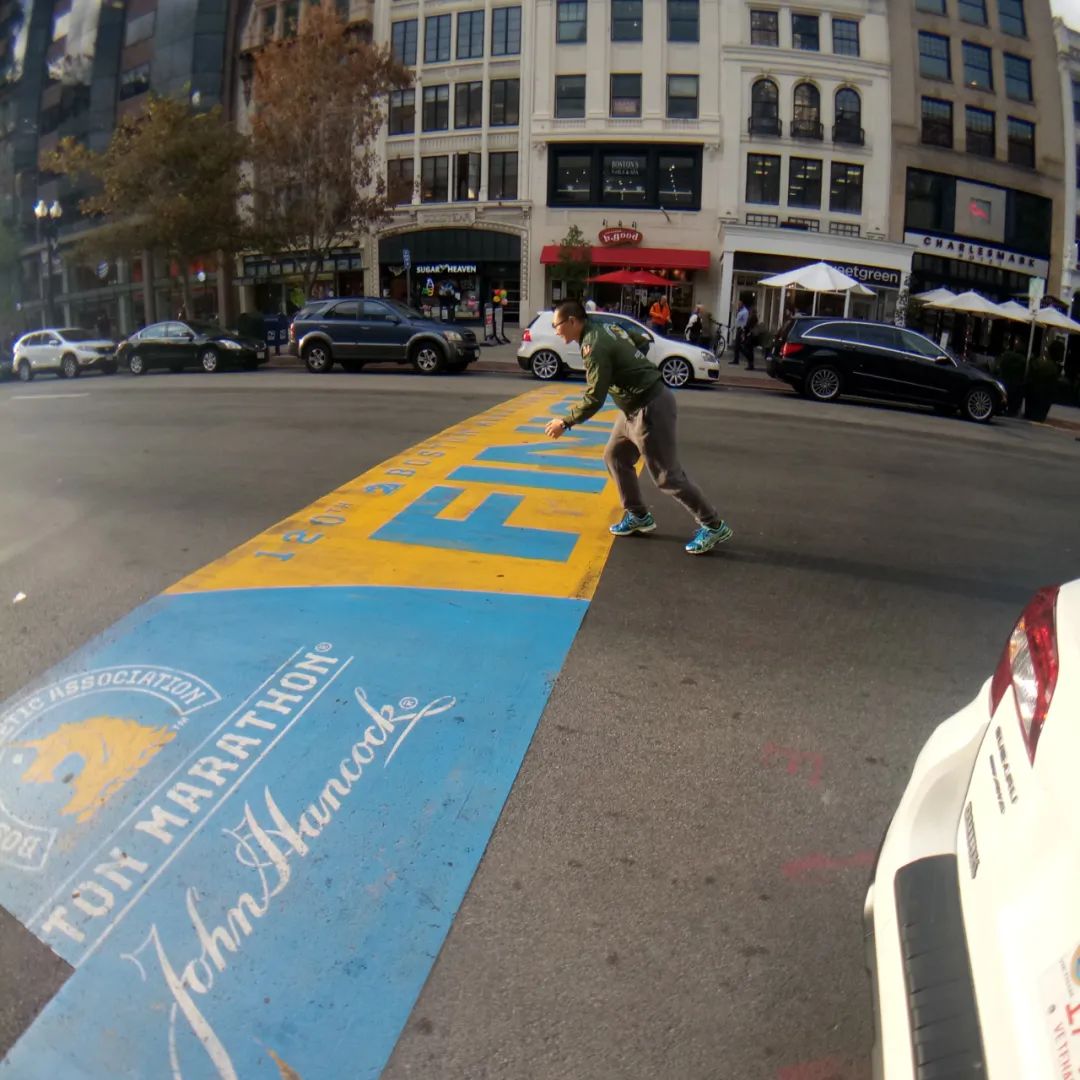
△ Boston Marathon End Source: Respondents provided
China’s running fire originated in 1981, marked by the first China International Marathon held in Beijing, in which 85 athletes from 12 countries participated. Although the number and scale were small, it quietly lit a prairie fire.
From 2010 to 2014, the number of marathon events in China increased from 13 to 53. In addition to big cities such as Beishangguang, third-and fourth-tier cities such as Liupanshui in Guizhou and Xichang in Sichuan also started to hold marathons in those years.
In 2014, the State Sports General Administration cancelled the approval of mass and commercial sports events, and marathon events began to blow out. By 2019, 1,828 large-scale events will be held nationwide, 247 more than 1,581 in 2018, which is equivalent to holding five marathons every day on average.
After that, three years after the epidemic, many races were stopped or postponed. Perhaps the secret training of runners in these three years has led to the explosion of marathon events this year.
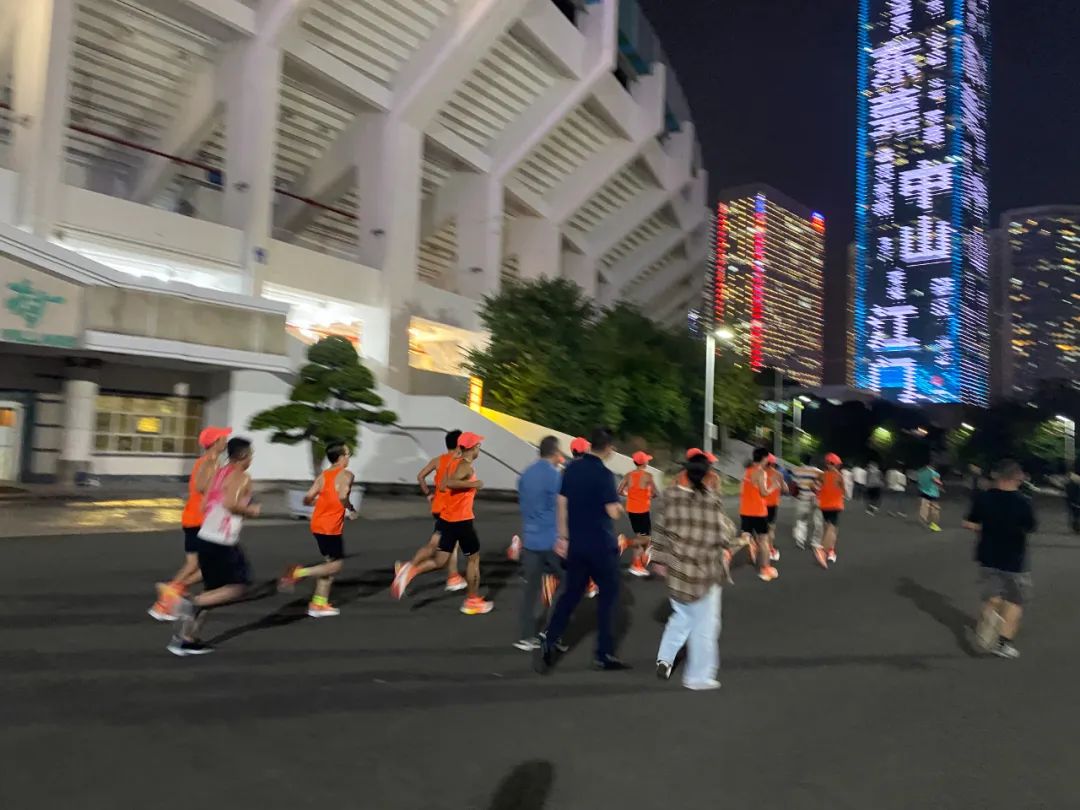
△ Runners being trained at Guangzhou Tianhe Stadium Times Weekly Li Hang/photo
This autumn, the heat of marathon events is inversely proportional to the falling temperature.
According to incomplete statistics, on October 15th alone, 32 marathons started at the same time.
In November, there were more than 100 national marathons, most of which were held in third-and fourth-tier cities, counties and streets. There is even an article ridiculing: "There are too many marathons, and middle-aged people are not enough."
The intensive marathon events made many runners feel complicated: "I won the Shenzhen Marathon on December 3 and the Guangzhou Marathon on December 10, but the interval between the two races was too short, so I’m afraid I can’t recover." Runner Ding Ming (a pseudonym) told the Times Weekly reporter.
But what he is really anxious about is that the horse racing atmosphere in Shenzhen is not strong and he can’t enjoy the fun of horse racing in the national carnival.
This anxiety implies that the marathon competition between cities has quietly started.

City in the eyes of racers
For the 39-year-old Guangzhou runner Wang Jiali, this year is a hot year for the marathon to return, and it is also a year for him to gradually find his state.
His horse racing experience began in Guangzhou Half Horse 11 years ago. "In 2011, I participated in a 10-kilometer running activity held in Guangzhou. A year later, it coincided with the first Guangzhou Half Horse. I thought that I could finish running 10 kilometers, so I signed up for Guangzhou Half Horse with an early adopter attitude."
Since then, Wang Jiali has started a nationwide horse racing career. "Marathon, cross-country and vertical marathon are all available, and 151 races have been completed so far." Wang Jiali said.
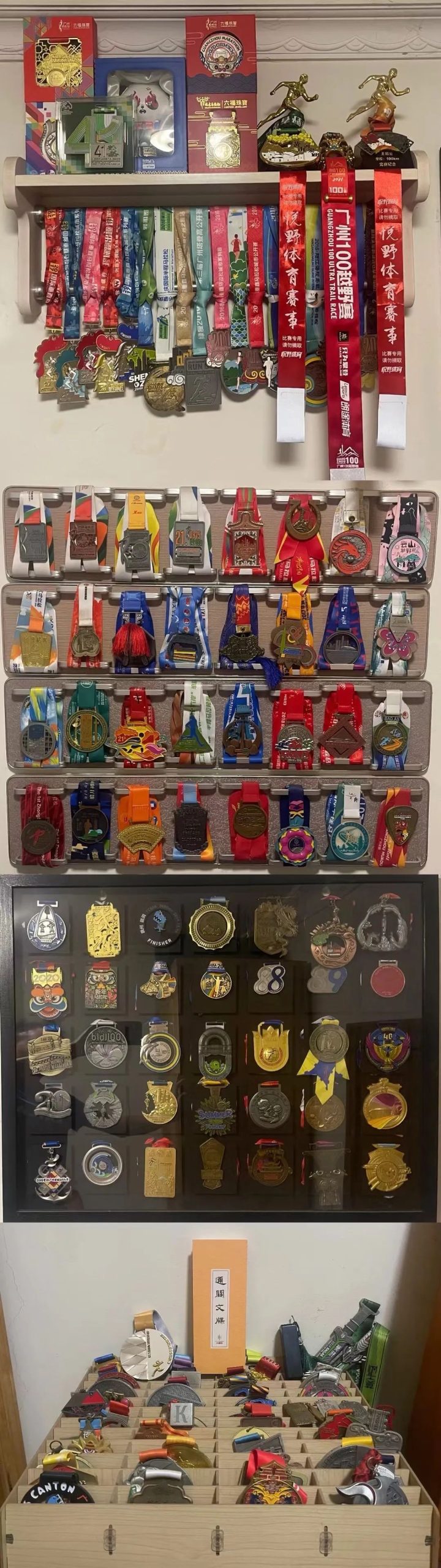
△ Wang Jiali’s medal is filled with a wall. Source: Respondents provide
If calculated according to the length of 42 kilometers per game, Wang Jiali has now run 6342 kilometers, which is nearly 1000 kilometers longer than the two farthest cities in China, Fuyuan County in the northeast of Heilongjiang Province and Ruili City in the southwest of Yunnan Province.
In 2019, the number of events in China reached its peak, and Wang Jiali also ushered in the busiest year in his horse racing career. "In the second half of 2019, I participated in a game almost every week, and even tried a back-to-back game on Saturday and Sunday."
The 11-year horse racing career has allowed him to witness the continuous expansion of the domestic running enthusiasts.
Wang Jiali said that when the marathon was just emerging in China, the number of applicants could not reach the quota set by the project, so long as they signed up, they could participate. Nowadays, with the popularity of marathon in China, the number of participants is increasing, and most marathon registrations are converted into lottery forms.
This year, there were 30,000 places in the Beijing Marathon, which attracted 130,000 people to sign up, and the final winning rate was 23%. The winning rate of the upcoming Shanghai Marathon is only 13.7%. The success rate of the Xiamen Marathon scheduled for January next year is only 5%, which is even lower than the admission rate of graduate students.
In contrast, marathons held in non-first-tier cities often have insufficient applicants.
Ding Ming said that he successfully signed up for two marathons in Shenzhen and Guangzhou, but many runners around him didn’t sign up for a large marathon this year, so they had to participate in the marathon events at the surrounding counties, cities, districts and towns.
"But they also face a problem. If there is no proof of the completion of large-scale events, they may lose their qualification to participate in some platinum and gold medals in China next year." Ding Luo said that horse racing has evolved into a competition between cities.
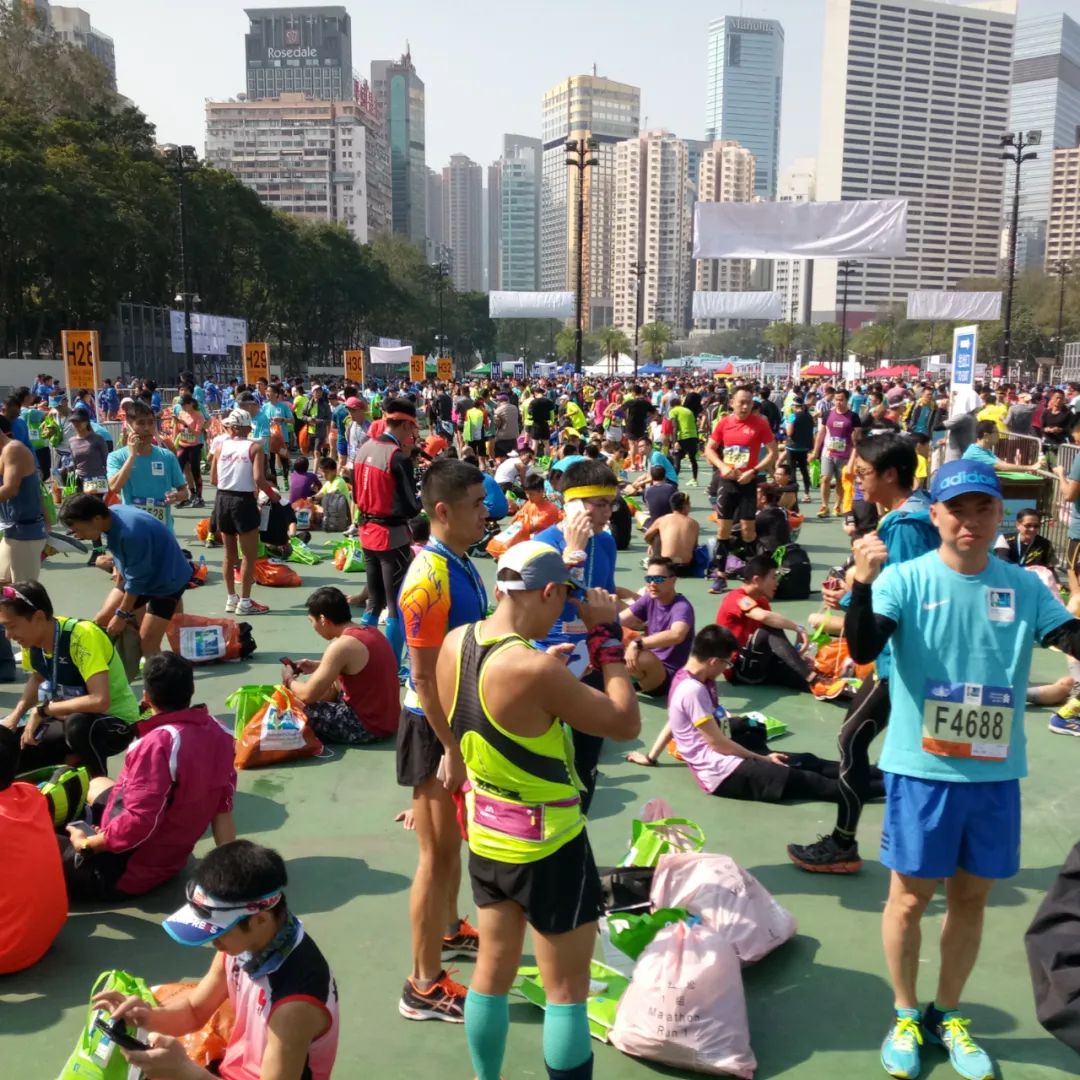
△ Hong Kong Marathon Source: Provided by respondents
Take the gold medal events of Beishangguangshen and Xiamen as examples. These cities have held events for a long time, and they can also invite overseas elite players to participate at a lower price in the early days. Once these players break through a certain standard, the specifications of the events can jump.
China Association of Athletics divides domestic marathon events into three categories: A, B and C, which are roughly divided from the perspectives of track, timing, referee, replenishment and full video recording. If the competition results and bonus amount reach the standard, you can apply to IAAF for the competition level of bronze, silver, gold, platinum and diamond.
The competition behind this is the economic strength of a city and the recognition of this event.
"Although Shenzhen is a gold standard event, in the eyes of many runners, it is not very attractive. The reason why I signed up is that I am afraid that I will not sign in other events."

Cultural tourism consumption behind marathon
Since the beginning of this year, the consumption of culture and sports has shown vigorous vitality.
From September 7th to 10th, "Jay Chou Carnival World Tour Concert tianjin railway station" was held in Tianjin Olympic Center. According to official reports, the four-day concert attracted 185,000 people, and the cumulative comprehensive consumption drove more than 3 billion yuan.
For the city, the concert is not only a music feast, but also an important force to stimulate economic development. Yu Mei, the research director of the cultural tourism industry of Co-Found think tank, once said in an interview that in order to watch the concert, the audience will also carry out a series of tourism, shopping and consumption activities before and after the performance, thus promoting the development of local tourism.
At this level, the marathon has the same function as the concert.
In the short term, holding a marathon can first directly bring in a large number of migrants such as competitors, spectators and escorts, and promote a series of consumption activities such as transportation, catering and accommodation, thus forming a fixed tourism peak period and promoting the development of urban tourism industry.
Take Xiamen as an example. From 2009 to 2013, due to the holding of the international marathon, the average annual growth rate of the total number of foreign tourists in Xiamen reached 18.43%, and the tourism revenue increased from 125 million yuan to 226 million yuan.
After the Wuxi Marathon ended this year, the official data showed that the Wuxi Marathon held on March 19th generated 69.6 million yuan in catering economic benefits, 116.61 million yuan in accommodation economic benefits, 6 million yuan in transportation economic benefits, 2.09 million yuan in tourism economic benefits and 500,000 yuan in sales of event booths, totaling nearly 200 million yuan.
Many runners have also calculated a consumption account with the Times Weekly reporter.
"Take me as an example. Now I’m signing up for the marathon, except for the big events, basically to travel to a new city. Before I go, I will know the culture, history and diet of the city in advance. After the game, I will play for a few more days. On average, each race costs about 2,000 yuan. If a marathon can attract 30,000 people, an event can at least make a city earn about 60 million. " Wang Jiali said.
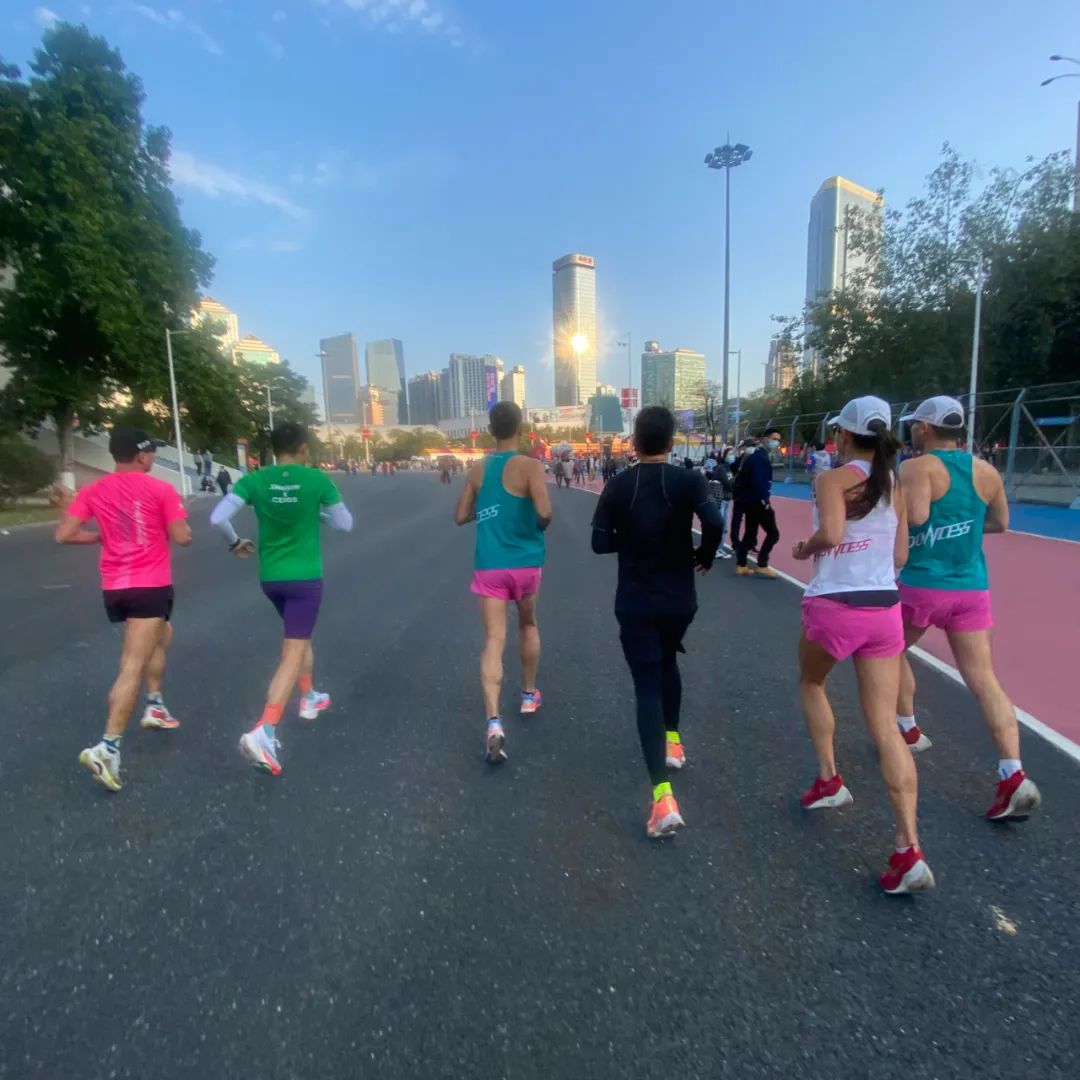
△ There are more and more runners. Source: Respondents provide
In addition, the sponsors’ investment and registration fees generated by the event itself are also an important part of the marathon economy. According to the staff of a sports brand, the sponsorship fee for marathon in first-tier cities can reach 10 million.
In the long run, marathon events can play a very good role in promoting the tourism brand of the host city, as well as shaping the city image and culture.
"When a city runs a marathon, it will choose a very representative road as the track, which is a kind of publicity for the city’s culture and characteristics. For the players, it is also a very happy thing that the roads that are usually busy are now closed for the players to compete. " Wang Jiali said.
Ding Ming, a running friend, also believes that the marathon is a good opportunity to promote the city. Through the line facilities, not only can more athletes fall in love with a city, but also the city tourism brand can be gradually started through word-of-mouth effect.
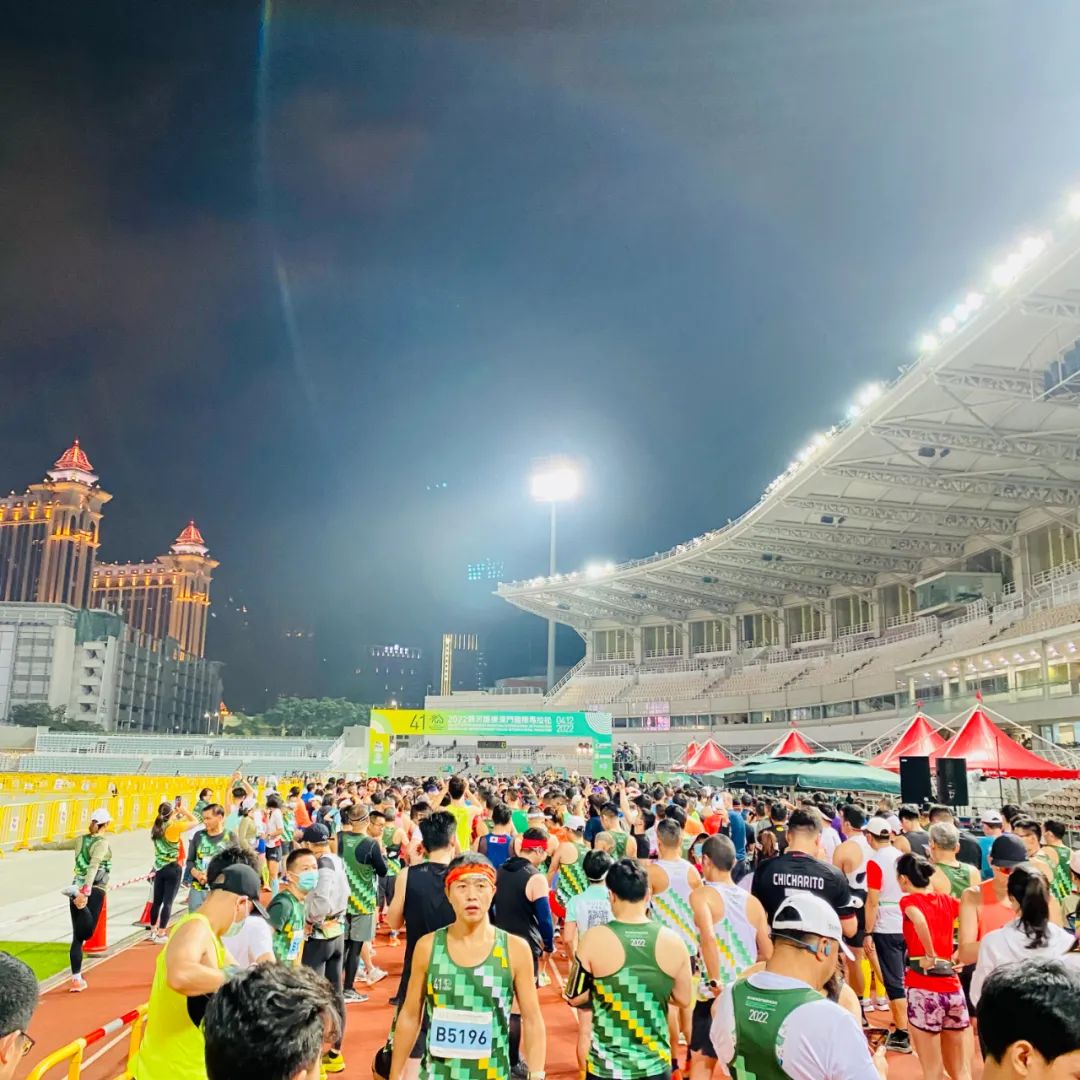
△ Macau Marathon Source: Provided by respondents
For small cities that can’t compete for the level of events, it is extremely important to use marathons to enhance the image of the city. For example, the "Yellow River Estuary International Marathon" held in Dongying, a fourth-tier town, has become the highlight of the city. Zhaoqing, Guangdong, also named the marathon as a local specialty of Deqing Gonggan, and there is no doubt that the characteristic of Shunde Marathon is food.
However, due to the large scale of marathon events, compared with music festivals, there are special requirements for venues and road conditions, and many places are actually not particularly suitable for hosting marathon events.
"For example, the reception capacity of some cities is not enough, and thousands of people are pouring in at once, and the basic facilities such as accommodation and transportation can’t keep up. The contestants have a poor sense of experience, or local residents don’t understand the marathon, and feel that the road closure of the event has affected their daily lives. It is not friendly enough for marathon runners, but it will be counterproductive." Ding Wei said.
For the city, this is not a simple competition, but an important opportunity to speak for the city and stimulate local industries and economy. The marathon in each city may become a part of the city symbol after development.
Author | Li Hang
Editor | Li Guang
Layout | Li Hang
Original title: "Urban War Behind Marathon"
Read the original text