Public Network Poster Journalist Wang Shuangai Correspondent Yao Wang Lu Guanyi Jining Report
In ancient China, waterway was the most commonly used long-distance transportation mode. Therefore, the long journey of sailing along the river has naturally become an opportunity for prosperity. Natural rivers shine brightly in the trade between business travelers, showing all kinds of ups and downs.
"Huairou Baishen, and the Qiao Yue River, allow Queen Wang Wei." Every river has a story flowing.
Especially the canal.
In 2021, the world-class "golden artery" of the Suez Canal was blocked by a "ship" of Ever Given. Although it took a week to get stranded and get out of trouble, no one seemed happy except the small excavator that fought alone. The 18,000 containers on board not only test how to save time and money as much as possible in the transportation process, but also face a series of "price increase" problems after the supply chain balance is broken.
According to rough statistics, more than 80% of the world’s trade activities are carried out by sea, and the international situation is slightly "nothing happens", so the pressure on maritime shipping naturally increases exponentially.
Inland river transportation and maritime transportation belong to waterway transportation.
China has a long coastline, numerous harbors, and a great river crossing the east and west. These natural rivers and lakesides are abundant in water, most of which are not frozen all year round, and most of the main navigable rivers are distributed in economically developed and densely populated areas. The unique resource advantages are very conducive to the establishment of estuary ports with economic value.
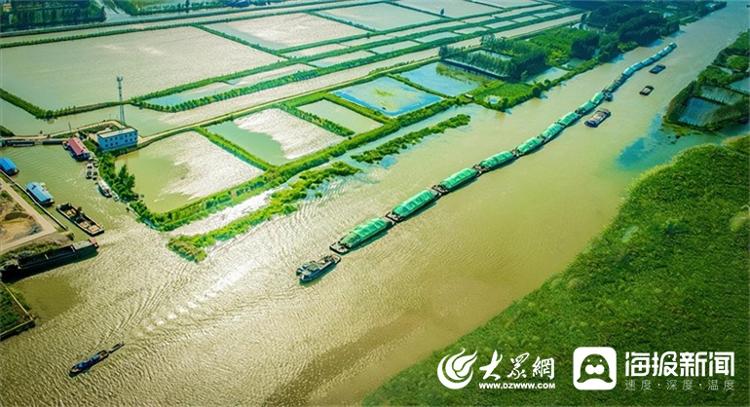 The Grand Canal runs through Weishan Lake. Chen Baocheng/photo
Counting the main inland shipping trunk lines in China, besides China’s "golden waterway" Yangtze River, South China’s water transport artery Pearl River, Heilongjiang and Songhua River, a Beijing-Hangzhou Grand Canal that makes up for China’s lack of north-south vertical natural waterway will surely occupy a place. If we want to focus on how to solve the structural contradiction of relatively low waterway transportation in domestic river sections, the section from Jining to Hangzhou in Shandong Province of the Beijing-Hangzhou Grand Canal is a typical case like a textbook.
With the help of the inland container shipping outlet of the Grand Canal, we firmly grasp the hope of urban transformation, and Jining, a city along the route, has the most say.
Resource-based cities, turning around on the spot
Jining is a typical resource-based city.
From the industrial point of view, Jining, with an annual output of 80 million tons of raw coal, is one of the 13 large-scale coal production bases and 7 coal chemical industrial bases planned and constructed by the state. For a long time, Jining’s coal industry has been dominant, and its shortcomings such as biased industrial structure, weak demand power, weak innovation drive and insufficient factor support have gradually become prominent. What is more predictable is that in the next two or three decades, Jining’s coal mines will gradually run out of resources.
How to transform resource-based cities? How to boost the social economy? Where should industrial workers closely related to coal go?
Holding more than 10,000 coal mine workers, Jining Energy Development Group "took the lead" and stood on the "gateway" of transformation. Although all the opportunities related to proper resettlement are worth grasping at present, Jining Energy Development Group has ushered in a real benefit: the establishment of Jining Port and Shipping Development Group.
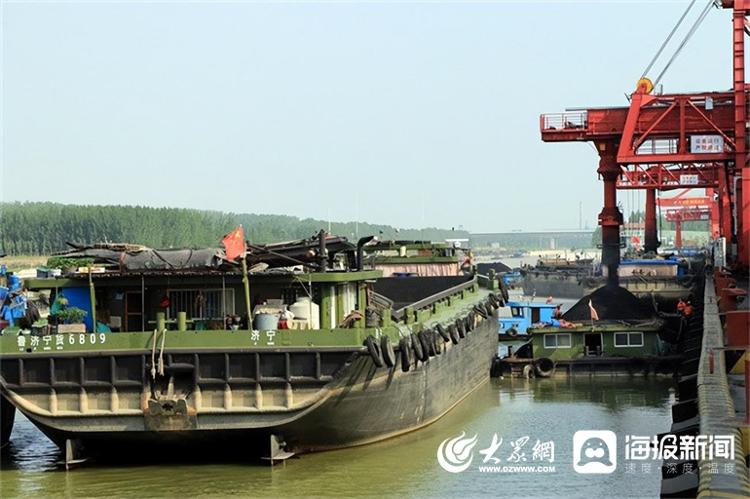 Wang Chuanjun, Shipper of Liangshan Port Wharf/photo
In May 2020, Jining Port and Shipping Development Group, with Jining Energy as the main body, was formally established, with the goal of anchoring and building the largest inland river shipping center in the north. By the end of 2021, Jining Port and Shipping Development Group has successfully completed the integration of three ports: Sendamei Yuejin Port, Longgong Port and Taiping Port, highlighting the construction of three hundred million-ton port groups: Liangshan Port, Main City Port and Weishan Port.
Among them, Liangshan Port is on the Wari Railway and next to the Beijing-Hangzhou Canal, occupying the throat of transporting coal from the west to the east, absorbing high-quality coal resources from Shanxi, Shaanxi and Mongolia, connecting with East China and Central China along the canal, directly entering the hinterland of the Yangtze River, radiating Jiangsu, Zhejiang, Shanghai, Hubei, Chongqing and Hunan, and becoming an important port logistics hub connecting the western coal source areas and the Yangtze River Delta Economic Zone. At present, eight 2,000-ton berths, 100,000 TEU container terminals and the largest span steel structure coal storage shed in China have all been put into operation.
Longgong Port aims to build the largest intelligent container demonstration port in Jiangbei inland river, and an automatic control center will be built, which will improve the working efficiency by 80%.
Gathering production in Hong Kong and integrating production in Hong Kong.
From January to June, 2022, the operating income of Jining Energy Port and Shipping Plate was 15.656 billion yuan, 5.6 times that of the same period last year, the port throughput was 9.3201 million tons, up 57.52% year-on-year, and the container transportation was 20,700 TEUs, 11 times that of the same period last year.
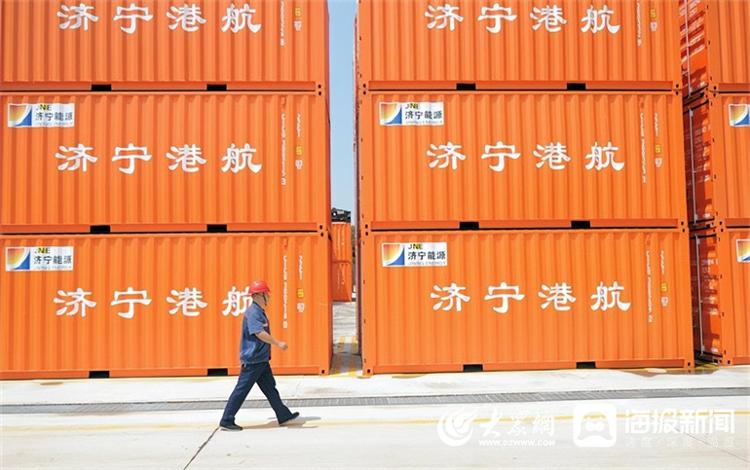 Jining Energy Port Container Brand
Canal, container port and port logistics constitute the three key words of Jining’s "turning around on the spot". Even if it closes a "door" where the volume and price of the coal industry are rising, this resource-based city is trying to open another "window" for port and shipping logistics to upgrade.
Through combined transport of hot metal and water, the river reaches the sea.
"It should be that Heaven teaches to open the water, and there are no mountains in more than a thousand miles." Ever since Fu Cha, the king of Wu, dug a ditch and shoveled the first shovel of soil, the Beijing-Hangzhou Grand Canal has been very minimalist. Among many rivers and lakes in China, she flows through eight provinces and cities, with a total length of about 3200 kilometers. These layouts are like blank spaces in Chinese painting, full of charm.
After 2500 years, the texture is still the same, and the Grand Canal is still the same. Coincidentally, the most important thing about the Beijing-Hangzhou Grand Canal is the sense of youth: whether it was the first time in April this year that the entire line was opened to water, or the 62-kilometer interconnection and experimental navigation of the entire Beijing-Hebei section of the Grand Canal in June, or the Liangshan Port along the Grand Canal was only "7 years old".
In Jining’s view, Liangshan Port is purely "out of thin air", but it is particularly "indispensable".
Liangshan Port started construction in April 2015, and was included in the key construction projects in Shandong Province, the coal emergency reserve base in Shandong Province and the multimodal transport demonstration project in Shandong Province. In order to get through this key node, Jining Energy excavated 17.1 kilometers of waterway and built 9.18 kilometers of special railway line, connecting the Wari Railway with the Beijing-Hangzhou Canal, and realized the multimodal transport of public iron and water.
As the northernmost section of the Beijing-Hangzhou Grand Canal, Jining Energy Liangshan Port is now a rapidly rising inland shipping port in Shandong Province, and has been praised by the industry as a "coal mine on the ground" that does not produce coal. With the help of the low cost of container inland transportation, which is only one third of the cost of road transportation, and tapping the water transport potential of the Grand Canal, Liangshan Port has taken advantage of the east wind of the national "double cycle" strategy, which has increasingly strengthened economic communication and trade between inland areas and coastal areas, and the freight volume has risen sharply.
In September 2021, Liangshan Port opened scheduled container routes from Jining to Wuhan, Taicang (Shanghai), Nanjing, Huai ‘an and Lianyungang, which can reach Taicang in 5 days and Wuhan in 10 days. After the overall completion of the project, it will have a handling capacity of 50 million tons, completely opening up a new channel for logistics and transportation of bulk goods such as upstream coal.
Longgong Port, located next to the main channel of the Grand Canal, aims to build the largest intelligent container demonstration port in Jiangbei inland river, and introduces the "seaport concept" into inland river ports to build a specialized and highly automated container port, thus opening a new mode of green and intelligent container transportation in Jiangbei inland river.
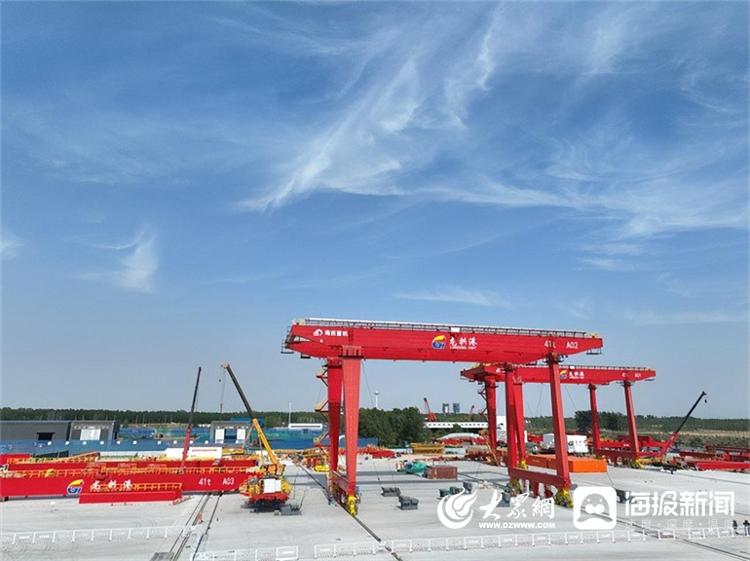 Construction scene of Longgong Port
At present, the construction of 6#-8# container berths in Longgong Port is speeding up, and it will be put into operation smoothly at the end of July, reaching the annual handling capacity of 300,000 TEUs, which will vigorously promote the "revolution of water" and "scattered collection" of bulk goods, and the transportation cost per ton of goods can be reduced by more than 30% compared with that of public rail transportation. By building a container multimodal transport project, after all the 10 berths and special railway lines in the second phase are put into operation, the annual throughput of 800,000 TEUs of containers and 1 million tons of groceries will be realized, and the annual throughput will exceed 20 million tons. It will become the first port in Jiangbei inland river to realize unmanned shore bridge, electrified transportation and automatic yard bridge.
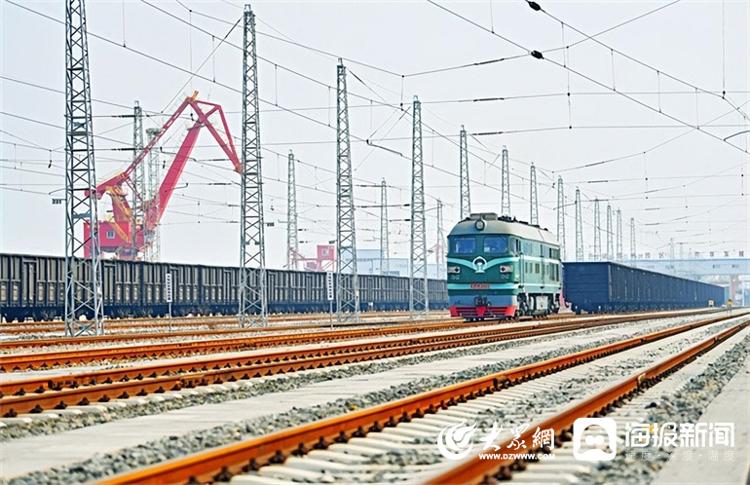 Liangshan port special railway line, the train is coming into the station.
With the established trend, more and more attention has been paid to the planning of river transport and river access to the sea.
In Jining City alone, this year, relying on four key ports, nearly 10 projects have been planned and constructed, including the intelligent container terminal project of Longgong Port, the new energy ship manufacturing base of port and shipping, the transportation equipment and container manufacturing base of port and shipping, and the metal material processing base of Liangshan Port.
By 2025, it is expected that the whole city will gradually realize logistics trade as the guide, and build a modern port and shipping logistics industry chain covering eight major businesses, including port operation, shipping, port and shipping engineering construction, commodity trading, supply chain finance, new energy ships and container manufacturing, intelligent logistics information service and integrated logistics, build a 100 million-ton port, develop 100 million-ton logistics, cultivate 100 billion industries, and build "China Northern Inland River Shipping Center" and "Jiangbei Commodity Trading Center".
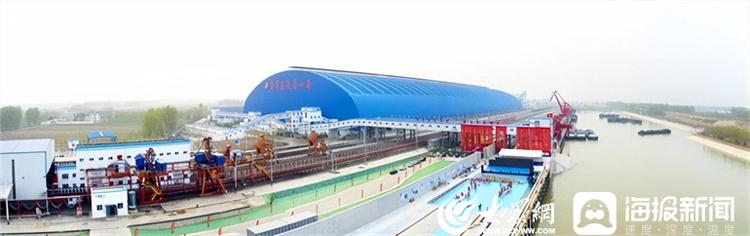 Jining energy Liangshan port Jinghang multimodal transport logistics zone
At the same time, Jining plans to build five industrial parks, such as Liangshan Jinghang multimodal transport logistics park, Longgong container demonstration park and Yuejin Lingang industrial park, which will further cultivate and expand the producer service industry and help multimodal transport show its super power.
In February of this year, the 14th Party Congress of Jining put forward "unswervingly implementing the breakthrough strategy of modern port and shipping logistics", adjusted and established the modern port and shipping logistics development headquarters, and demanded that the whole city make efforts to develop modern port and shipping logistics, promote inland shipping to break the obstruction, expand capacity and upgrade, and fully revive, build Shandong into a bridgehead open to inland and international, and strive for a port-type national logistics hub.
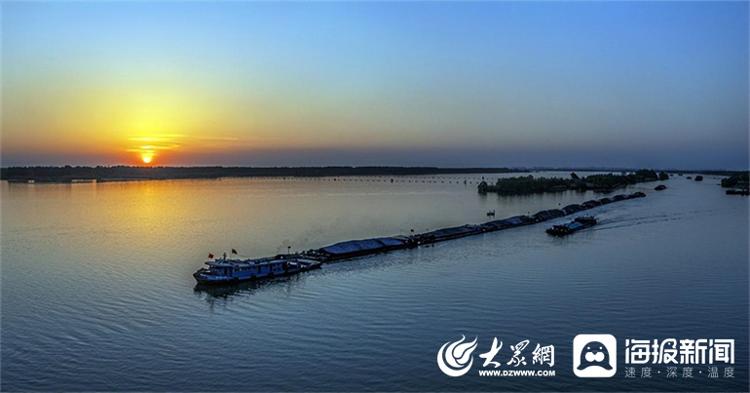 Jining Towing Team (No.2836) originating from Liangshan Port and heading south in the sunset Wang Chuanjun/photo
Nowadays, Jining continues the profound port and shipping culture, and relies on a full range of shipping elements to reproduce the prosperous scene of "officials, merchants and ships gather together, and hemp is under the economic city".
Interestingly, Jining has a different perspective every time it "screens", which reminds us repeatedly about the profound charm and proud responsibility of this city. When Jining dedicated her blood to the 20th National Congress of the Communist Party of China, we were even more surprised by her optimism, composure, wisdom and limitless future.
Source: Public Network