Before Xiao Jiu published several articles about cancer, I saw many people leaving messages with pessimistic thoughts, always thinking that they would have to wait for death if they got cancer. But in fact, some cancers are not as terrible as we think, and even in the advanced stage, it is also possible to cure them.
Some people question: Does the cure of cancer mean that the cancer cells in the body disappear and return to the normal state? Actually, it’s not. The cure of cancer is not quite the same as what we imagined.
There is a medical term called "5-year survival rate", which refers to the survival ratio of cancer patients after 5 years of illness. The 5-year survival rate is usually used to reflect the severity and progress of a certain cancer, so as to evaluate the therapeutic effect.
Theoretically, 80% of cancer metastasis and recurrence occur within 2 years after radical operation, and only a few occur after 5 years after radical operation. Therefore, if it does not recur within 5 years after radical operation, the chance of recurrence is very small, which means that it is close to cure.
Of course, judging whether a cancer patient has reached the standard of cure depends on various indicators.
First, look at the test results.
Whether the blood routine, urine routine, thyroid, tumor markers and autoimmune disease detection are qualified.
Second, look at imaging examination.
Whether the imaging examinations such as B-ultrasound, CT and magnetic resonance are normal, whether new lesions have been found, and whether the previous nodules have increased or become larger.
Third, look at related symptoms and manifestations.
See if there are any symptoms such as bleeding, pain, fever, weight loss and swollen lymph nodes.
If the above three indicators meet, it proves that the cancer has been cured.
Therefore, cancer is not a terminal disease. He Jie, an academician of China Academy of Sciences, said: There is no need to panic when early cancer is found. Most early cancers can be cured by surgery, and the 5-year survival rate is very high. He also said that there are five kinds of cancers that are relatively easy to cure at present: thyroid cancer, skin cancer, breast cancer, prostate cancer and Hodgkin’s lymphoma.
Among them, thyroid cancer has a long course and slow development, and the 5-year survival rate is as high as 97%. Even if the tumor has grown to a large size, there is still great hope of cure after resection.
Because skin cancer occurs on the body surface, it is easy to detect, and some skin cancers will also have precancerous skin lesions, which is helpful for early detection and early diagnosis. The data show that the 5-year survival rate of early skin cancer is as high as 99%.

According to the data published by The Lancet, the 5-year survival rate of breast cancer in China was 83.2% from 2010 to 2014, which has turned into a chronic disease. First, the proportion of early breast cancer among newly diagnosed patients has increased significantly, and second, the treatment of breast cancer is more accurate and standardized.
Prostate cancer has a hidden onset and slow growth, and its early tumor volume is generally small, which has no effect on normal prostate function. The 5-year survival rate is 53.5%.
Hodgkin’s lymphoma accounts for about 30% of all lymphomas, and the incidence is high in young people around 40 years old. If the treatment is standardized in the early stage of diagnosis, the cure rate can reach more than 80%. Even after recurrence, 50% patients can still be cured.

These four kinds of cancers may also be cured in the advanced stage.
Many cancer patients, knowing that they are in the terminal stage of cancer, give up on themselves, thinking that they are hopeless. In fact, one-third of cancers can be prevented, one-third can be cured, and one-third can be treated to reduce pain.
Of course, the staging of cancer is also closely related to the therapeutic effect. Generally speaking, the hope of curing early cancer is greater than that of middle and late cancer, but this does not mean that late cancer is hopeless. Cervical cancer, colorectal cancer, lymphoma and reproductive system cancer may also be cured in the later stage.
1. Cervical cancer
In the classification of cervical cancer, 80% is squamous cell carcinoma with less difficulty and better treatment effect. A large number of data and clinical observations show that although advanced cervical cancer can not be operated, it is very sensitive to radiotherapy and is one of the classic diseases of radiotherapy. After radical radiotherapy, the 5-year survival rate can reach 50%.
2. Colorectal cancer
According to the data of the National Cancer Center, 83% of patients with colorectal cancer were in the middle and late stage when they were first diagnosed. Does this mean that it is hopeless? Of course not! Colorectal cancer is one of the most effective tumors in all parts of the body, especially in the digestive tract.
The cure rate of colorectal cancer can reach more than 80% by using three major therapies in clinic. Even in the advanced stage, through standardized multidisciplinary comprehensive treatment, the hope of cure is still great.
3. Lymphoma
Relatively speaking, lymphoma is a relatively rare type of malignant tumor. As long as it is found early, 70%-80% of lymphoma can be cured after regular treatment, and the 5-year survival rate can reach about 50%. With the improvement of medical level, the progress of advanced lymphoma is also great. The effect of radiotherapy plus chemotherapy is remarkable, which can prolong the life of patients and improve their symptoms.
4, reproductive system cancer
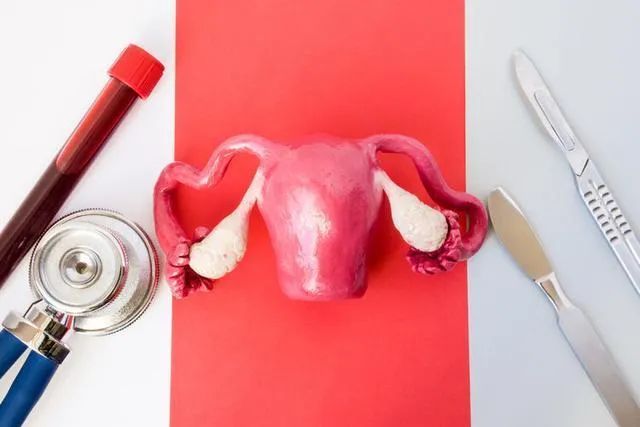
The cure rate of reproductive system cancers such as cervical cancer, ovarian cancer, prostate cancer and testicular cancer is also very high. Because the cells in uterus, ovary and testis grow rapidly, normal cells can grow rapidly while radiotherapy and chemotherapy kill cancer cells.
Therefore, the cure rate of cervical precancerous lesions is almost 100%, even if it recurs, it is lower than 1%, and the cure rate of male testicular cancer can reach 70%-80%.

What should I do after five years?
For cancer patients who don’t relapse within 5 years after radical surgery and spend it safely, can they think that they have returned to a normal state and have no worries since then?

No, cancer is difficult to overcome, largely because of its recurrence and metastasis. Therefore, it has achieved clinical cure, and it should be reviewed regularly to prevent cancer cells from growing again and be alert to the second primary cancer.
At the same time, we should also pay attention to developing a healthy lifestyle. After a serious illness, the body’s immunity is definitely not as good as before. If we don’t pay attention to adjusting our lifestyle, cancer cells are likely to make a comeback.
Anti-cancer is a protracted war. Nowadays, the World Health Organization has defined cancer as a chronic disease. As long as cancer patients are actively treated, they can "coexist peacefully" with cancer cells without affecting their survival and quality of life.
However, whenever, we should develop a healthy lifestyle to prevent cancer.
References:
[1] "Early diagnosis and early treatment, the cure rate of some cancers can exceed 90%". China News Network .2014-07-15
[2] The 5-year survival rate of breast cancer patients in China reached 83.2%. Xinhuanet.2019-04-22
[3] National Health and Wellness Commission: The five-year survival rate of malignant tumor is 40.5%, and it has increased by nearly 10% in 10 years. CCTV.2019-11-21
Original title: "These four cancers may be cured even in the advanced stage! It’s not necessarily a loss of money and money. Look at it.
Read the original text